
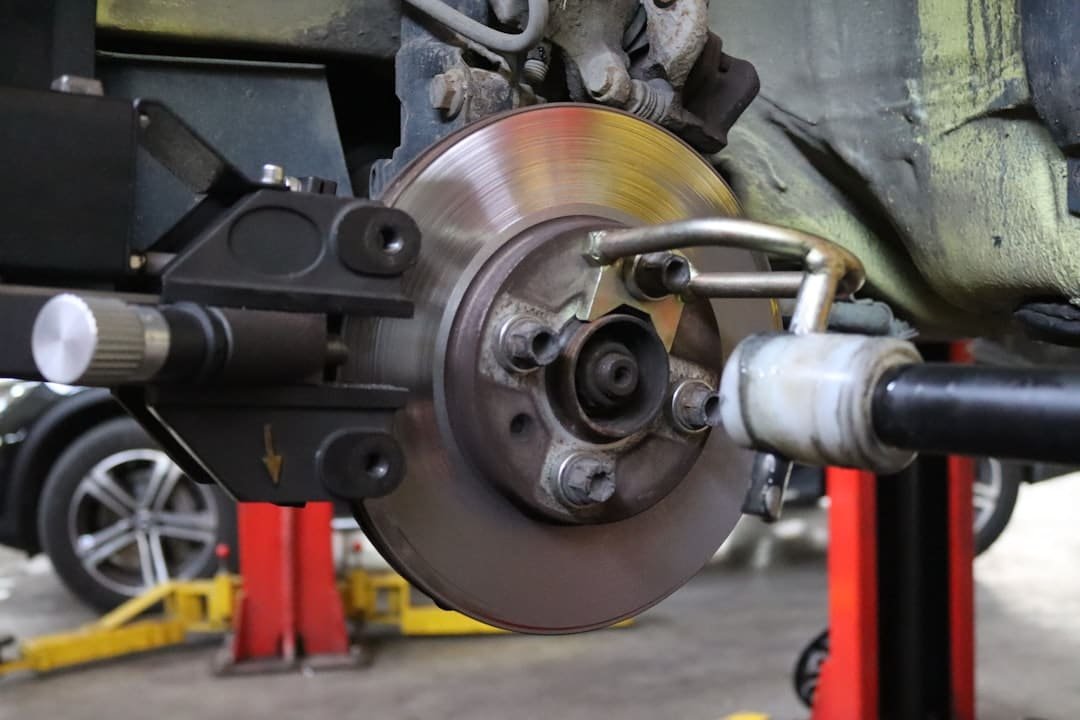
A harsh grinding or growling sound during braking deserves prompt attention, but the sound alone does not identify the failed part. Worn pads and metal contact are possible causes; debris, damaged rotors, caliper hardware or a nearby wheel component can also create a grinding noise.
Tell the shop whether the sound happens only while braking, at low speed, while turning, after rain, after a pothole impact or even when the brake pedal is released. That distinction helps define the inspection.
Worn brake pads and rotor contact
Brake pads use friction material against the rotor. If that material becomes very thin or is gone, the backing plate may contact the rotor. Inspection should confirm pad thickness, wear pattern, rotor condition and whether the caliper and hardware are moving correctly.
Do not assume the repair is “pads only.” Rotor measurements, caliper operation, brake-hose condition and the condition on the opposite side of the axle can affect the proposed scope.
Other possible sources of grinding
- Road debris: grit or a small object between a shield and rotor may scrape as the wheel turns.
- Rotor or shield contact: corrosion, scoring, damage or a bent dust shield can create a metallic sound.
- Caliper and hardware concerns: sticking movement, damaged clips or guide-pin problems can create uneven contact.
- Wheel or bearing noise: a sound that changes with vehicle speed even without braking may point beyond the friction brakes.
What a brake inspection may cover
- Pad thickness and wear pattern on both sides
- Rotor surface, thickness and related measurements
- Caliper, slide, hardware, hose and visible fluid concerns
- Backing plate, wheel and tire area for contact or road-impact damage
- A careful road test when the vehicle can be operated safely
Ask what inspection charges apply and request the findings and a vehicle-specific estimate before authorizing repair work. See our Chicago brake repair service for scheduling and inspection questions.
Related brake guides
Frequently Asked Questions
Why do my brakes grind when I stop?
Worn brake pads and metal contact with the rotor are possible causes. Debris, damaged rotors or hardware can also grind, so prompt inspection is important.
Can I still drive with grinding brakes?
If stopping power, pedal feel, steering or vehicle control changed, stop driving and arrange professional or towing guidance. Otherwise limit unnecessary driving and arrange prompt inspection.
How much will it cost to fix grinding brakes?
Cost depends on the inspection findings, vehicle, affected components, parts and labor. Request a vehicle-specific estimate before authorizing work.
Hearing grinding? Request a brake inspection.
SSS Auto Repair is at 2815 N Sheffield Ave in Chicago.
Searching for a brake shop near you in Chicago? We're right on Sheffield Ave.
Book Appointment Call (773) 472-4444