
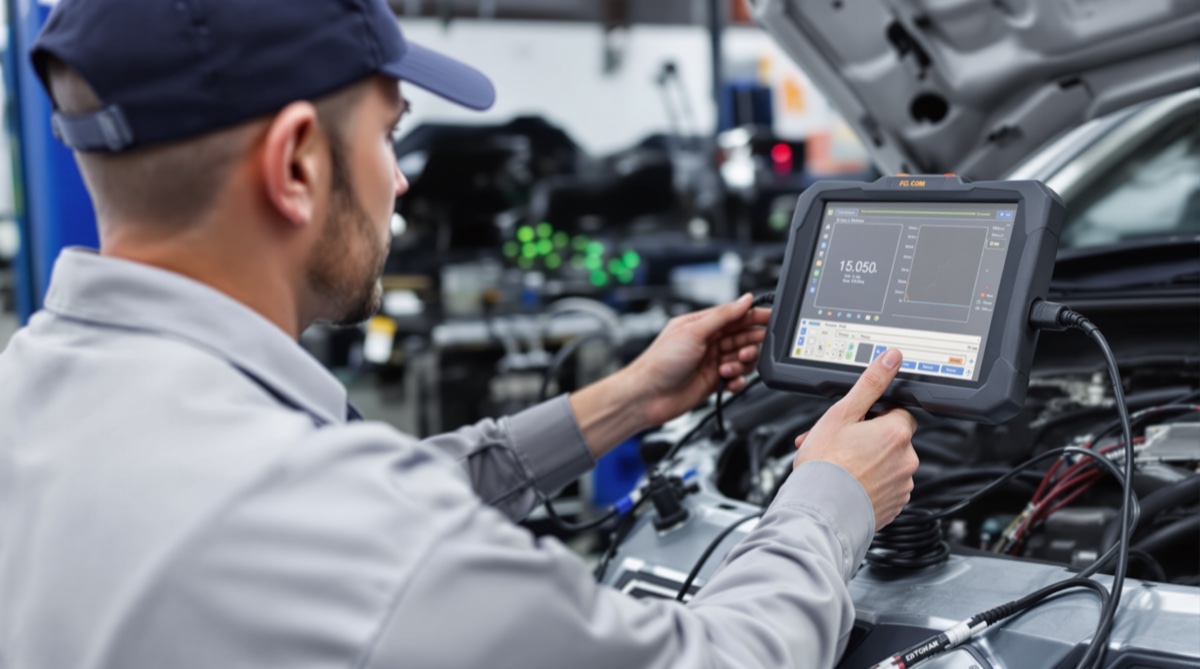
A dashboard light or hard-to-explain driving problem can make any Chicago commute stressful. A proper car diagnostic test turns that symptom into a testable cause before anyone recommends parts.
This guide explains what a vehicle diagnostic may include, what affects scope and cost, and when a warning light or severe symptom means you should stop driving. It is written for drivers near Lakeview, Lincoln Park, Wrigleyville and the surrounding North Side neighborhoods.
What is a car diagnostic test?
A car diagnostic is a structured investigation. The technician gathers the symptoms, reads data from the vehicle's control modules and then performs physical, electrical or mechanical tests to confirm the root cause.
The scan tool matters, but it is only one part of the process. A trouble code identifies the system that noticed a problem; it does not automatically identify the failed part. For example, an oxygen-sensor code can be caused by the sensor, damaged wiring, an exhaust leak, a vacuum leak or a fuel-delivery problem.
What does a professional diagnostic include?
- Symptom review: when the issue happens, how the vehicle feels and whether recent work may be related.
- System scan: trouble codes, freeze-frame data, readiness monitors and communication faults across available modules.
- Live-data review: sensor readings and system commands while the vehicle is idling, driving or under a controlled test.
- Visual inspection: wiring, connectors, hoses, fluid levels, leaks and damaged or loose components.
- Targeted testing: circuit, charging-system, component or mechanical checks selected for the suspected causes.
- Findings and next steps: the evidence found, remaining possibilities, proposed repair and estimate before repair work begins.
How much does a car diagnostic test cost in Chicago?
Diagnostic scope and cost depend on the vehicle, symptoms and testing required. Ask about diagnostic charges and request a vehicle-specific estimate.
| Possible testing category | What it may involve | What can expand the scope |
|---|---|---|
| Initial scan and symptom review | Stored codes, freeze-frame data, warning lights and reported symptoms | Multiple codes, limited system access or missing repair history |
| Focused system testing | Live data, inspection, circuit checks or component tests | Intermittent symptoms, multiple systems or a condition that must be reproduced |
| Complex or intermittent diagnosis | Additional testing under the conditions that trigger the problem | Vehicle-specific procedures, circuit tracing and time needed to reproduce the fault |
See our Chicago car diagnostic service page for scope and scheduling, or call (773) 472-4444 with the vehicle and symptoms.
What affects diagnostic timing?
Timing depends on the symptoms, tests required and current schedule. An intermittent electrical or drivability problem may take longer because the condition may need to be reproduced before possible causes can be tested. Ask for an expected timeframe before authorizing diagnosis.
You can help shorten the process by describing exactly when the issue appears: cold start, after rain, at highway speed, while braking, with the air conditioning on or after the engine warms up.
Chicago conditions that can complicate a diagnosis
- Road salt and moisture can corrode electrical grounds, connectors and exposed wiring.
- Pothole impacts can loosen connections or damage suspension, wheel-speed and steering components.
- Short city trips may leave a weak battery undercharged and create intermittent starting or voltage-related faults.
- Stop-and-go heat can expose cooling, charging and drivability problems that do not appear on a short cold test.
- Seasonal temperature swings can reveal small leaks, marginal sensors and battery problems.
When should you stop driving?
Arrange diagnostic testing for a steady check engine light, intermittent hesitation, poor fuel economy, a hard start or a warning that returns after being cleared. Consult the vehicle guidance because urgency depends on the warning and symptoms.
If a flashing check engine light appears with severe shaking, poor running, smoke, a strong fuel smell, overheating or sudden power loss, pull over safely and arrange professional or towing guidance.
For check-engine-specific guidance, read blinking versus solid check engine light. If the light appeared after a parts-store scan, compare a free code scan with a real diagnostic.
How to prepare for your appointment
- Do not clear the codes or disconnect the battery before the appointment.
- Write down the warning message and when the symptom occurs.
- Bring recent repair records if the problem started after other work.
- Mention unusual sounds, smells, leaks or changes in fuel economy.
- Call ahead if the car is overheating, shaking badly or may be unsafe to drive.
Frequently Asked Questions
How much does a car diagnostic test cost in Chicago?
Diagnostic scope and cost depend on the vehicle, symptoms and testing required. Ask about diagnostic charges and request a vehicle-specific estimate.
How long does a car diagnostic test take?
Timing depends on the symptoms, required tests and current schedule. Intermittent problems may take longer because the condition may need to be reproduced before possible causes can be tested. Ask for an expected timeframe before authorizing diagnosis.
Is a code scan the same as a diagnostic test?
No. A scan retrieves trouble codes and system data. A diagnostic test uses those results as a starting point, then tests possible causes with live data, inspections and component or circuit checks.
Can I drive with the check engine light on?
Consult the vehicle guidance and consider how the car is running. If a flashing light appears with severe shaking, poor running, smoke, fuel odor, overheating or power loss, pull over safely and arrange professional or towing guidance.
What should I bring to a diagnostic appointment?
Bring the vehicle key, any recent repair records and a short description of when the symptom happens. Note whether the engine is hot or cold, the speed, weather and warning lights involved. Those details can help define testing.
Need a clear answer before replacing parts?
Book a car diagnostic at SSS Auto Repair on Sheffield Avenue in Chicago.
Book Diagnostic Service Call (773) 472-4444