
7 OBD-II Check Engine Codes: Meanings & Possible Causes
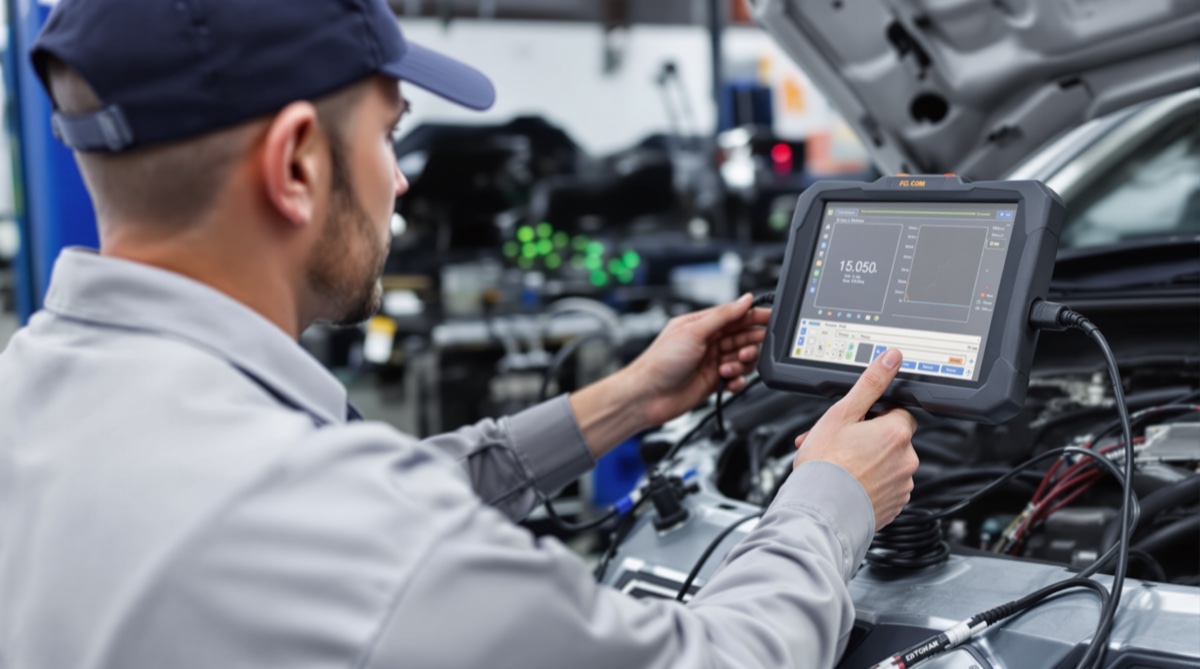
An OBD-II code identifies a reported system or condition, not a confirmed failed part.
A diagnostic trouble code identifies a condition the vehicle computer detected. The same code can have several causes, so use these definitions as starting points rather than parts-replacement instructions.
This guide covers seven OBD-II code families that drivers often look up after a scan. Record the exact code, warning-light pattern and symptoms before clearing anything.
1. P0420/P0430 - Catalytic Converter Efficiency Below Threshold
What it indicates: The catalyst-monitoring system detected efficiency below the expected threshold on bank 1 or bank 2.
Possible causes: A deteriorated catalytic converter, an exhaust leak, incorrect sensor data or an engine problem that affected the converter. Test the underlying cause before replacing the converter.
2. P0171/P0174 - System Too Lean (Bank 1/Bank 2)
What it indicates: The engine computer reached a correction limit while detecting a lean condition on one or both cylinder banks.
Possible causes: Unmetered air, fuel-delivery problems, exhaust leaks, sensor data or wiring faults. The code does not prove that an oxygen or mass-airflow sensor failed.
3. P0300-P0306 - Random/Multiple Cylinder Misfire
What it indicates: P0300 reports random or multiple-cylinder misfire activity; P0301 through P0306 identify the cylinder number reported.
Possible causes: Ignition, fuel, compression, air, timing, sensor or wiring problems. If the light flashes with shaking, poor running or power loss, pull over safely and arrange professional or towing guidance.
4. P0440/P0442 - Evaporative Emission Control System Leak
What it indicates: P0440 reports a general evaporative-emissions system fault; P0442 reports a small leak detected by the system.
Possible causes: A loose or damaged fuel cap, hose or seal leaks, valves, sensors, wiring or other EVAP-system faults. A cap check is useful, but the code may require testing if it returns.
5. P0128 - Coolant Thermostat (Coolant Temperature Below Thermostat Regulating Temperature)
What it indicates: The engine did not reach the expected coolant temperature within the monitored conditions.
Possible causes: Thermostat operation, coolant level, temperature-sensor data, wiring or other cooling-system conditions. Check the vehicle-specific test procedure before replacing a thermostat.
6. P0455 - Evaporative Emission Control System Leak Detected (Large Leak)
What it indicates: The evaporative-emissions monitor detected a large leak or could not build or hold the expected pressure or vacuum.
Possible causes: A missing, loose or damaged fuel cap, disconnected hose, valve fault, leak or related electrical issue. If there is a strong fuel smell or visible leak, move away from traffic and get professional guidance.
7. P0172/P0175 - System Too Rich (Bank 1/Bank 2)
What it indicates: The engine computer reached a correction limit while detecting a rich condition on one or both cylinder banks.
Possible causes: Fuel-delivery faults, restricted airflow, incorrect sensor data, ignition problems or wiring issues. Review related codes and test before replacing a sensor or fuel component.
How to Use an OBD-II Code Without Guessing
- Record the exact code and status. Note whether it is current, pending or permanent if the scan tool shows that information.
- Save the conditions. Freeze-frame data and the time, temperature, speed and symptoms can help define the next test.
- Do not clear it before the appointment. Clearing codes can remove useful data and reset emissions-readiness monitors.
- Look for related codes. Several codes may share one underlying cause rather than requiring several parts.
- Test before replacing parts. Ask what evidence supports the proposed repair.
Chicago Conditions to Mention During Diagnosis
Local conditions do not prove the cause of a code, but they can help reproduce an intermittent concern:
- Cold starts or temperature swings: note whether the light appears only after a cold soak or warm-up.
- Road salt and moisture: mention faults that appear after snow, rain or a car wash.
- Pothole impacts: report whether the warning began after a hard impact or new vibration.
- Short trips: tell the shop if the vehicle rarely reaches full operating temperature.
- Stop-and-go driving: note whether the symptom appears at idle, in traffic or only at highway speed.
When the Warning Light Needs Faster Attention
Consult the vehicle manual and consider the symptoms, not only the code number. If a flashing light appears with shaking, poor running, power loss, smoke, a strong fuel smell or overheating, pull over safely and arrange professional or towing guidance. See the blinking versus solid check engine light guide for a focused comparison.
Check Engine Light On? Request Vehicle-Specific Testing
Start with our check engine light diagnostic service. For no-start, electrical or drivability concerns, see the broader car diagnostics in Chicago page. Call to ask about testing scope, diagnostic charges and current scheduling before authorizing work.
Schedule Check Engine Light DiagnosisCall us at (773) 472-4444 or visit our shop at 2815 N Sheffield Ave, Chicago, IL 60657-5003