
Check Engine Light Diagnostic Near Lakeview, Chicago
Solid or blinking check engine light? Describe how the vehicle is running and ask about diagnostic availability, testing scope and charges.
Solid vs. Blinking Check Engine Light
Solid Check Engine Light
A solid light means the vehicle computer detected a fault. Urgency depends on other symptoms and the vehicle guidance. Arrange diagnostic testing and stop driving if the vehicle runs poorly, overheats, smokes or loses power.
Blinking Check Engine Light
A blinking light can indicate an active problem such as a misfire. If it appears with shaking, poor running, power loss, smoke or a fuel smell, pull over safely and arrange professional or towing guidance.
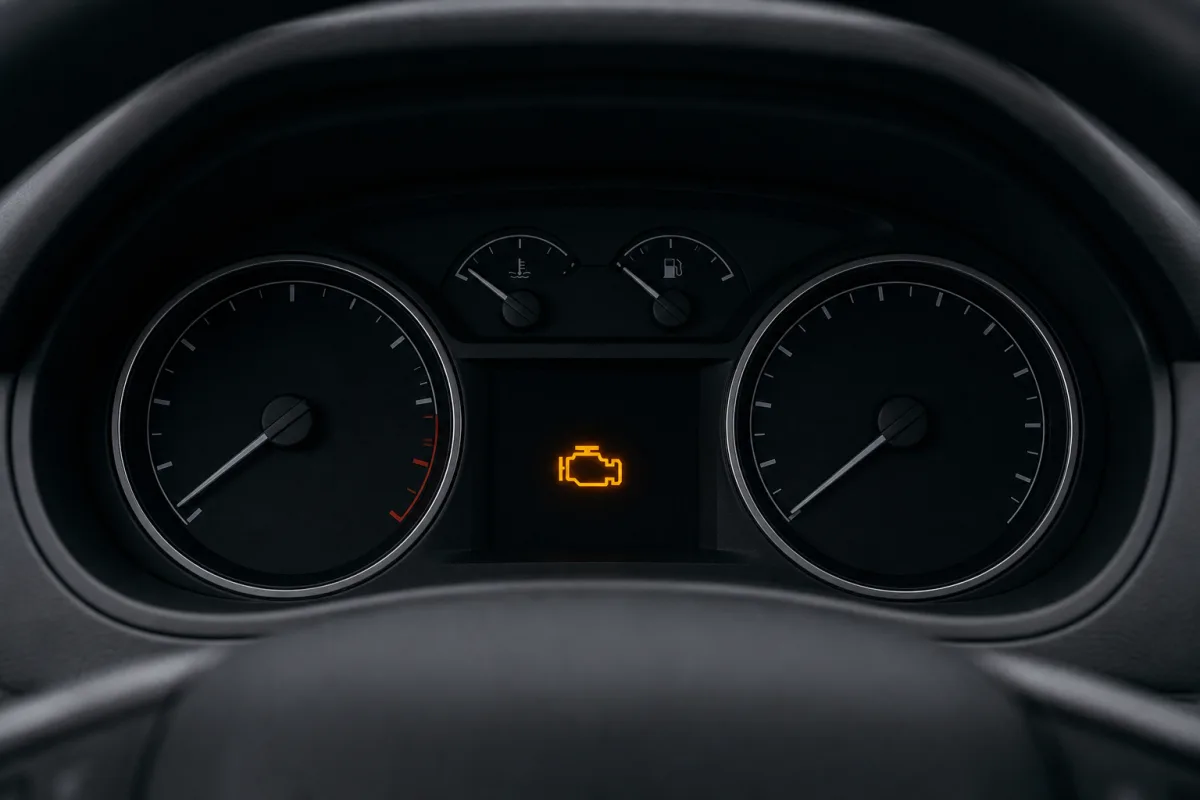
For a focused safety comparison, read the blinking versus solid check engine light guide.
Questions Diagnostic Testing Can Help Answer
Which System Reported a Fault?
A scan can retrieve stored codes and related data. The code identifies a system or condition; it does not automatically name the failed part.
What Should Be Tested Next?
Symptoms, scan data and vehicle information help determine whether inspection, live-data review, circuit checks or component tests are appropriate.
What Supports the Repair?
Ask which findings support the proposed repair, whether more testing is needed and what estimate applies before approving parts replacement.
A Trouble Code Is a Starting Point
A parts-store scan can provide a trouble code, but one code can have several possible causes. Vehicle-specific testing may be needed before the cause and repair scope can be confirmed.
Compare a free code scan with a full diagnostic, look up common OBD-II code families and meanings below, or review diagnostic cost, scope and timing factors. For no-start, electrical or drivability concerns without a check engine light, use the broader Chicago car diagnostics page.
Common OBD-II Codes and What They Can Mean
A code names the system or condition the computer flagged, not a confirmed failed part. Use these as starting points for testing, not as a shopping list.
P0420 / P0430: Catalyst efficiency below threshold
The catalyst monitor saw converter efficiency below the expected level on bank 1 or bank 2. A worn catalytic converter is one cause; an exhaust leak, oxygen-sensor data or an engine problem that affected the converter can also set it, so test the cause before replacing the converter.
P0171 / P0174: System too lean
The engine computer reached its correction limit for a lean mixture on one or both banks. Unmetered air, fuel-delivery problems, exhaust leaks, sensor data or wiring can cause it. The code doesn't prove an oxygen or mass-airflow sensor failed.
P0172 / P0175: System too rich
The computer reached its correction limit for a rich mixture. Fuel-delivery faults, restricted airflow, incorrect sensor data, ignition problems or wiring can be involved. Review related codes and test before replacing a sensor or fuel part.
P0300–P0306: Misfire detected
P0300 reports random or multiple-cylinder misfires; P0301 to P0306 name the cylinder. Ignition, fuel, compression, air, timing, sensor or wiring problems can cause them. If the light flashes with shaking or power loss, pull over safely and arrange professional or towing guidance.
P0440, P0442 and P0455: EVAP system leak
The evaporative-emissions system reported a general fault (P0440), a small leak (P0442) or a large leak (P0455). A loose or damaged fuel cap is a common first check, but hoses, seals, valves, sensors or wiring may need testing if the code returns. If you smell strong fuel or see a leak, get professional help.
P0128: Coolant below thermostat temperature
The engine didn't reach the expected coolant temperature in the monitored conditions. Thermostat operation, coolant level, temperature-sensor data or wiring can be involved. Follow the vehicle-specific test before replacing a thermostat.
Four Check Engine Light Myths
“It always means a major problem.”
Some causes are minor, like a loose gas cap; others affect drivability, emissions or engine protection. The exact code, the light pattern and testing narrow it down.
“If the car runs fine, ignore it.”
A car can feel normal while the computer has stored an emissions, sensor or intermittent fault. Note the light and arrange testing rather than assuming no symptom means no problem.
“The code tells you which part to buy.”
One code can come from wiring, a leak, a mechanical condition, sensor data or another system that affected the monitor. Ask what test connects the code to the proposed part.
“Clearing the code fixes it.”
Clearing turns the light off until the monitor runs again; it doesn't repair the cause. It also erases freeze-frame data and resets the emissions-readiness monitors that an Illinois emissions test checks.
What to Tell the Shop When You Call
- Vehicle year, make, model and engine, if known
- Whether the check engine light is solid or blinking
- Any shaking, stalling, hesitation, power loss, smoke, odors or overheating
- The exact code numbers and status (current, pending or permanent), if you've had a scan
- Whether the symptom happens cold, warm, at idle, under acceleration, after rain, snow or a car wash, or after a pothole impact
- Whether most trips are short ones that may not fully warm the engine
- Recent repairs, battery disconnection or code clearing. If the codes are still stored, leave them until the visit.
Check Engine Light Help Near Chicago's North Side
Lake View
SSS Auto Repair is on Sheffield Avenue near the Lake View and Lincoln Park border.
Lincoln Park
Call with the warning light and symptoms before planning a visit from Lincoln Park.
Wrigleyville & North Center
Review nearby-area information, directions and current scheduling questions.
Check Engine Light Diagnostic FAQ
What does a solid check engine light mean?
A solid light means the vehicle computer detected a fault. Urgency depends on the symptoms and vehicle guidance; arrange diagnostic testing and stop driving if the vehicle runs poorly, overheats, smokes or loses power.
Can a blinking check engine light be serious?
A blinking light can indicate an active problem such as a misfire. If it appears with shaking, poor running, power loss, smoke or a fuel smell, pull over safely and arrange professional or towing guidance.
Is a free code scan the same as a diagnostic?
No. A scan retrieves stored trouble codes. Diagnosis may add live-data review, inspection, circuit checks or component testing to narrow the possible cause.
Does a trouble code tell me which part to replace?
No. A code identifies the system or condition that reported a fault. Wiring, leaks, sensor data or a mechanical problem can set the same code, so testing should confirm the cause before parts are replaced.
Will clearing the code fix the check engine light?
No. Clearing turns the light off until the monitor runs again; it doesn't repair the cause. It also erases freeze-frame data and resets emissions-readiness monitors, so leave the code stored until the vehicle is tested.
What does code P0420 mean?
P0420 means the catalyst monitor saw bank 1 catalytic converter efficiency below the expected threshold; P0430 is the same check for bank 2. An exhaust leak, oxygen-sensor data or an engine problem can also set it, so test the cause before replacing the converter.
How much does check engine light diagnosis cost?
Cost depends on the vehicle, symptoms and testing required. Ask about the proposed scope and diagnostic charges before authorizing work.
Check Engine Light On?
Call SSS Auto Repair and describe whether the light is solid or blinking and how the vehicle is running. Ask about current diagnostic availability and charges.
Call (773) 472-4444Book a Diagnostic