
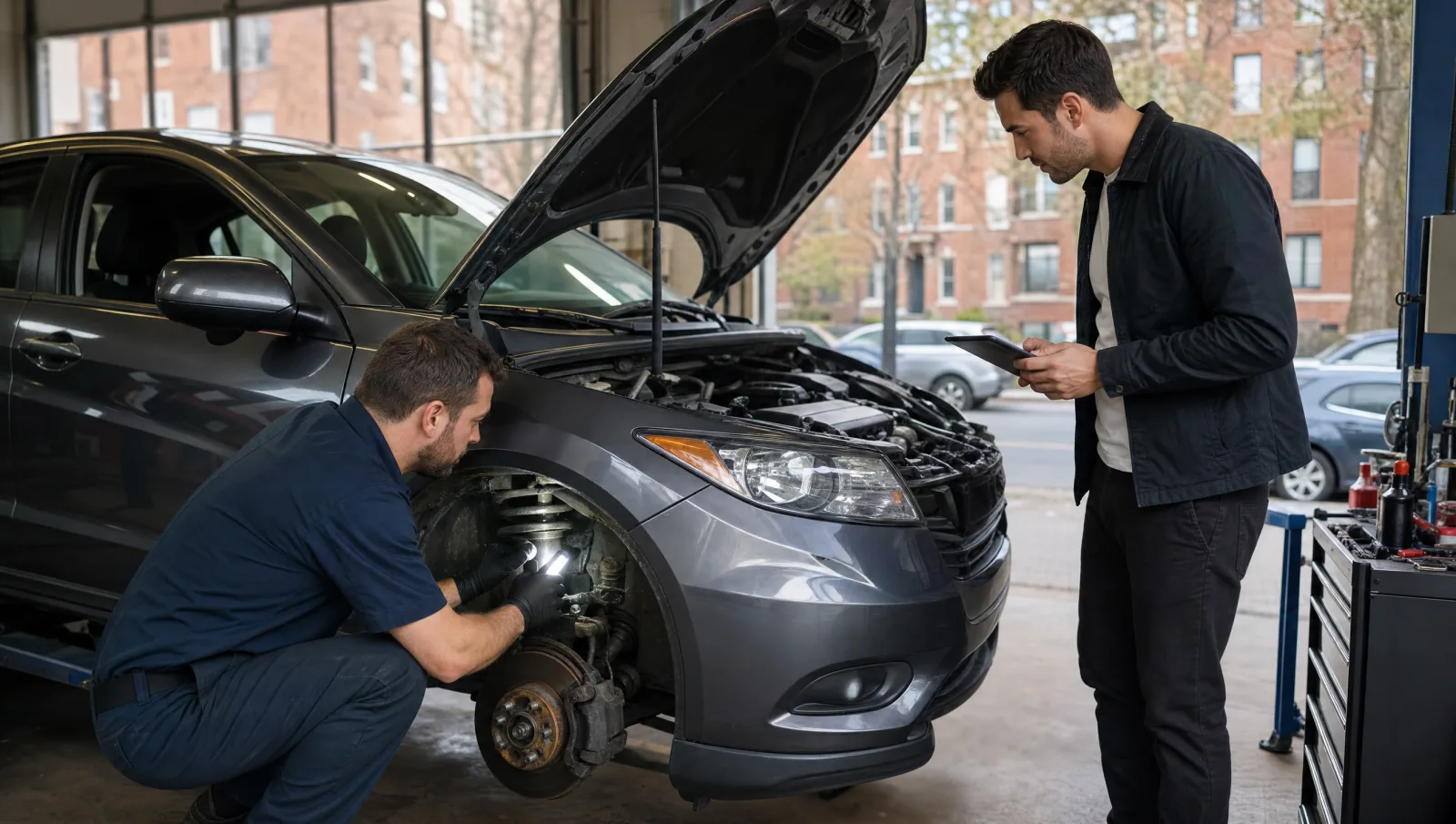
Buying a used car in Chicago can be a smart move, but it can also become expensive fast if hidden problems show up after the sale. A vehicle can look clean in photos, drive fine around the block, and still hide worn brakes, suspension damage from potholes, rust from winter salt, old diagnostic codes, fluid leaks or an AC system that barely works at idle.
A pre-purchase inspection can add useful information before the money changes hands. It does not guarantee a perfect vehicle, but it can provide a clearer picture of visible and testable concerns that affect the purchase decision. If you are shopping on the North Side, review our used car inspection service, then call to confirm scope, charges and scheduling.
What Is a Pre-Purchase Inspection?
A pre-purchase inspection is an independent mechanic’s review of a used vehicle before you commit to buying it. It is more thorough than a quick test drive and more objective than a seller’s checklist. The technician looks for mechanical, safety, diagnostic and maintenance issues that could affect the purchase decision.
The inspection can help answer practical questions: Is the car safe? Are there warning lights? Are the brakes worn? Is the suspension noisy? Does the AC work? Are there leaks or rust concerns? What repairs are likely soon?
For Chicago buyers, that information is especially useful because city driving is hard on vehicles. A car that spent years on salted streets, pothole-heavy roads and short trips may need repairs that are not obvious at first glance.
Why Chicago Used Cars Need Extra Attention
Potholes and suspension wear
Chicago potholes can bend wheels, damage tires, knock alignment out, wear ball joints, and create suspension noises. A vehicle may drive straight at low speed but vibrate on the highway or pull under braking. A used car inspection should look for uneven tire wear, worn steering components and noises over bumps.
Winter salt and rust
Road salt helps keep streets passable, but it is hard on brake lines, exhaust parts, underbody components and fasteners. Surface rust is common; structural corrosion or rusted brake lines are a bigger concern.
Stop-and-go city driving
North Side traffic wears brakes, batteries and cooling systems. Short trips can prevent full warm-up, which can contribute to moisture buildup and engine wear. These patterns are why a local mechanic’s inspection is more valuable than a generic checklist.
Used Car Inspection Checklist Before You Buy
1. Exterior and body condition
- Look for mismatched paint, uneven panel gaps and overspray.
- Check whether doors, hood and trunk open smoothly.
- Look under the edges for rust bubbles or water intrusion signs.
- Compare tire wear from side to side; uneven wear can point to alignment or suspension issues.
2. Underbody, leaks and rust
A lift inspection can reveal what photos hide: oil leaks, coolant seepage, exhaust rust, damaged splash shields, worn bushings and underbody corrosion. Leaks may not drip on the seller’s driveway during a short showing, but residue underneath often tells the story.
3. Brakes
Brake condition affects safety and negotiation. The inspection should check pad thickness, rotor condition, caliper movement and brake fluid concerns. If the vehicle shakes, grinds or pulls while stopping, plan for brake inspection and repair before relying on it daily.
Don’t Ignore Dashboard Warning Lights
A dashboard light on a used car should never be dismissed as “probably nothing.” Sellers may say it is a loose gas cap, an old sensor or something they planned to fix later. Maybe that is true. Maybe it is not. The only responsible answer is diagnostic testing.
A professional scan can review current stored and pending codes, readiness monitors, freeze-frame data and permanent codes where supported. Incomplete readiness monitors may indicate a recent reset, but a scan cannot reconstruct erased codes.
If a car you want to buy has a warning light, arrange a professional diagnostic scan before you pay. A flashing check engine light, rough running or strong fuel smell should be treated as serious until proven otherwise.
Test the AC and Heat Before Buying
AC issues are easy to overlook during a short winter test drive, but they can be expensive in summer. Turn the AC on, let the car idle, and check whether the air gets cold while stopped and while driving. Listen for compressor noise, weak airflow or musty smells.
The defroster matters too. AC operation helps remove humidity from the cabin, which improves visibility in rain and cold weather. A used car with weak AC or poor airflow may need a cabin filter, blower repair, leak diagnosis, compressor work or electrical testing. If the system blows warm, budget for AC system inspection before assuming it only needs a recharge.
What a Mechanic Checks During a Used Car Inspection
A good inspection is not a yes-or-no rubber stamp. It should give you a practical picture of the vehicle’s condition and the likely next expenses. The exact checklist depends on the vehicle, but a strong pre-purchase inspection typically includes:
- Engine bay inspection for leaks, belts, hoses, mounts and visible wear.
- Fluid level and condition checks where accessible.
- Battery, charging and starting system observations.
- Brake pad, rotor, hose and fluid-condition checks.
- Steering, suspension, tire and alignment clues.
- Undercarriage review for rust, damage and leaks.
- OBD-II scan for current, pending and stored codes.
- AC/heat operation and blower performance.
- Road-test observations when appropriate and safe.
The goal is to separate normal used-car wear from red flags that change the deal. A car can still be worth buying with known maintenance needs if the price reflects them. The danger is buying blind.
How to Schedule a Used Car Inspection
Used cars can sell quickly, especially if the price looks good. That pressure is exactly why buyers skip inspections—and why bad purchases happen. Inspection scheduling availability can help you move fast without giving up due diligence.
Call to discuss current scheduling, vehicle access, inspection scope and charges. If the seller can bring the car to 2815 N Sheffield Ave, an inspection may identify concerns that affect the purchase decision. For urgent timing, call about auto repair scheduling and inspection availability.
Buying Near Lakeview or Wrigleyville? Use a Local Mechanic
A convenient shop matters during a used-car purchase. If you are looking at vehicles around Lakeview, Wrigleyville, Lincoln Park, North Center or nearby North Side neighborhoods, driving across the city for an inspection can complicate the deal. A local mechanic makes it easier to inspect the car before the seller moves on.
SSS Auto Repair is at 2815 N Sheffield Ave in Chicago. Review our Lakeview auto repair page or Wrigleyville auto repair page, then call to confirm inspection scope and scheduling before signing paperwork or sending final payment.
Red Flags That May Mean You Should Walk Away
- The seller refuses an independent inspection.
- The check engine light is on, the seller reports recently clearing diagnostic codes, or readiness monitors are incomplete.
- Transmission slips, bangs into gear or delays engagement.
- The car overheats, smells like burning, or leaks heavily.
- There is severe rust near structural areas or brake/fuel lines.
- The brake pedal feels unsafe or the car pulls hard while stopping.
- Title, mileage, VIN or ownership details do not add up.
- The seller pressures you to decide before inspection.
Not every flaw is a deal breaker. Worn tires, brakes or minor leaks can be negotiation points. But safety issues, severe rust, overheating, major warning lights or a seller who blocks inspection should make you slow down.
Questions to Ask the Seller Before the Inspection
Before you schedule the inspection, ask the seller a few direct questions. The goal is not to interrogate them; it is to decide whether the vehicle is worth your time and whether anything needs special attention during the inspection. Ask how long they have owned it, why they are selling, whether there are maintenance records, whether any warning lights have been on recently, and whether the title is clean and in their name.
Ask about recent repairs, accidents, tire age, brake work, oil leaks, AC performance and recent repairs. If the seller says a warning light was “fixed,” ask what was repaired and whether documentation exists. If they say the battery was just replaced, remember that codes or readiness monitors may have been reset. That does not automatically mean something shady happened, but it is exactly the kind of detail a technician should know before scanning the car.
A cooperative seller usually understands why a buyer wants an inspection. If the seller refuses to let an independent mechanic look at the vehicle, demands immediate payment, or pressures you to skip basic checks, treat that as a red flag. A good used car should be able to stand up to reasonable scrutiny.
How to Use Inspection Results to Negotiate
The inspection is not only about deciding yes or no. It can help you negotiate from facts instead of feelings. If the technician finds worn brake pads, leaking struts, weak AC, old tires or diagnostic codes, you can compare the repair cost to the asking price. Sometimes the right move is asking the seller to lower the price. Sometimes it is asking them to complete repairs first. Sometimes it is walking away.
Keep the negotiation practical. Normal maintenance on a used car is expected. A vehicle with 100,000 miles may need fluids, brakes or tires soon. That is different from hidden collision damage, severe rust, overheating, slipping transmission or warning lights that the seller minimized. The inspection helps you separate expected ownership costs from expensive surprises.
If you still want the vehicle, use the inspection to build a first-month repair plan. Safety items such as brakes, tires, steering, suspension and warning lights come before cosmetic issues. Comfort items like AC may be negotiable, but in Chicago summer they can still matter to daily use and resale value.
What to Bring to a Pre-Purchase Inspection
Bring the vehicle, the keys, any maintenance records the seller provides, and enough time for the technician to inspect without rushing. If you are the buyer, bring the listing information and any concerns you noticed during the test drive. If the seller is bringing the vehicle, ask them to arrive with the title questions answered and permission for a diagnostic scan.
During the test drive, pay attention to cold start behavior, idle quality, steering feel, braking, transmission shifts, warning lights, AC temperature, heat, smells and noises. Tell the technician what you noticed. Even small comments like “it clunks over bumps” or “the AC gets warm at stoplights” can direct attention to the right system.
After the inspection, ask for plain-language priorities: what is unsafe, what is likely expensive, what is normal wear, and what should be monitored. A useful inspection should make the buying decision clearer, not bury you in jargon.
Common Hidden Repair Costs on Chicago Used Cars
Some used-car problems are easy to see, like bald tires or a cracked windshield. Others hide until a technician inspects the car or scans the computer. These hidden costs are the ones that can turn a “great deal” into a budget problem. A pre-purchase inspection should help you spot them before you negotiate.
Brake work is one common example. A seller might say the car stops fine, but pads can be thin, rotors can be grooved, calipers can stick, or brake fluid can be overdue. Suspension is another. A car can feel acceptable on smooth streets but reveal worn struts, control arms or links once it is lifted or driven over bumps. AC problems can also hide if you test the car on a cool day and never let it idle long enough to expose weak cooling.
Diagnostic issues deserve special attention. Clearing codes may turn off a dashboard warning temporarily, while incomplete readiness monitors can indicate that the vehicle has not completed its post-reset checks. A current scan can add useful information before purchase, but it cannot reconstruct erased codes.
Think Beyond the Purchase Price
A used car’s real price is the purchase price plus the work it needs to become safe and dependable. That is why two cars with similar mileage can be very different deals. One may need only routine maintenance, while the other may need brakes, tires, suspension work, engine diagnostics and AC repair within the first month.
Before buying, decide what repairs you are comfortable handling immediately and what would make the car no longer worth it. A pre-purchase inspection helps turn that decision into numbers and priorities instead of guesswork. It also gives you a calmer way to negotiate because you are not arguing opinions; you are discussing actual findings.
That clarity is especially valuable when several buyers are chasing the same vehicle and the seller wants a quick answer.
How a Pre-Purchase Inspection Can Save Money
The biggest value of a pre-purchase inspection is not just finding problems. It is understanding the real cost of ownership before you buy. A car listed for a tempting price may need brakes, tires, AC work, suspension repair and engine diagnostics. Another car that costs more upfront may be the better deal because it needs less work.
Inspection findings can help you negotiate, ask the seller to repair issues, budget for immediate maintenance, or walk away. That is a better position than discovering the same problems after the title is already in your name.
Frequently Asked Questions
Is a pre-purchase inspection worth it for a used car?
It can reveal mechanical, safety, diagnostic and maintenance concerns that affect the purchase decision, but it does not guarantee a problem-free vehicle.
What does a mechanic check during a used car inspection?
Scope varies. Ask whether brakes, tires, suspension, steering, fluids, leaks, battery, AC and heat, diagnostic codes, underbody condition and road-test observations are included.
How do I check pre-purchase inspection availability in Chicago?
Call ahead with the year, make, model and timing to confirm current scheduling, vehicle access, scope and charges.
Should I buy a car if the check engine light is on?
Not before diagnosing it. The issue could be minor or expensive. A current scan can check stored, pending and permanent codes where supported, while incomplete readiness monitors may indicate a recent reset.
What are the biggest red flags when buying used in Chicago?
Major rust, fluid leaks, overheating, slipping transmission, unsafe brakes, warning lights, title issues and a seller refusing inspection are serious warning signs.
Need a pre-purchase inspection in Chicago?
SSS Auto Repair is at 2815 N Sheffield Ave. Call to confirm inspection scope, charges, vehicle access and current scheduling.
Call (773) 472-4444Book Appointment