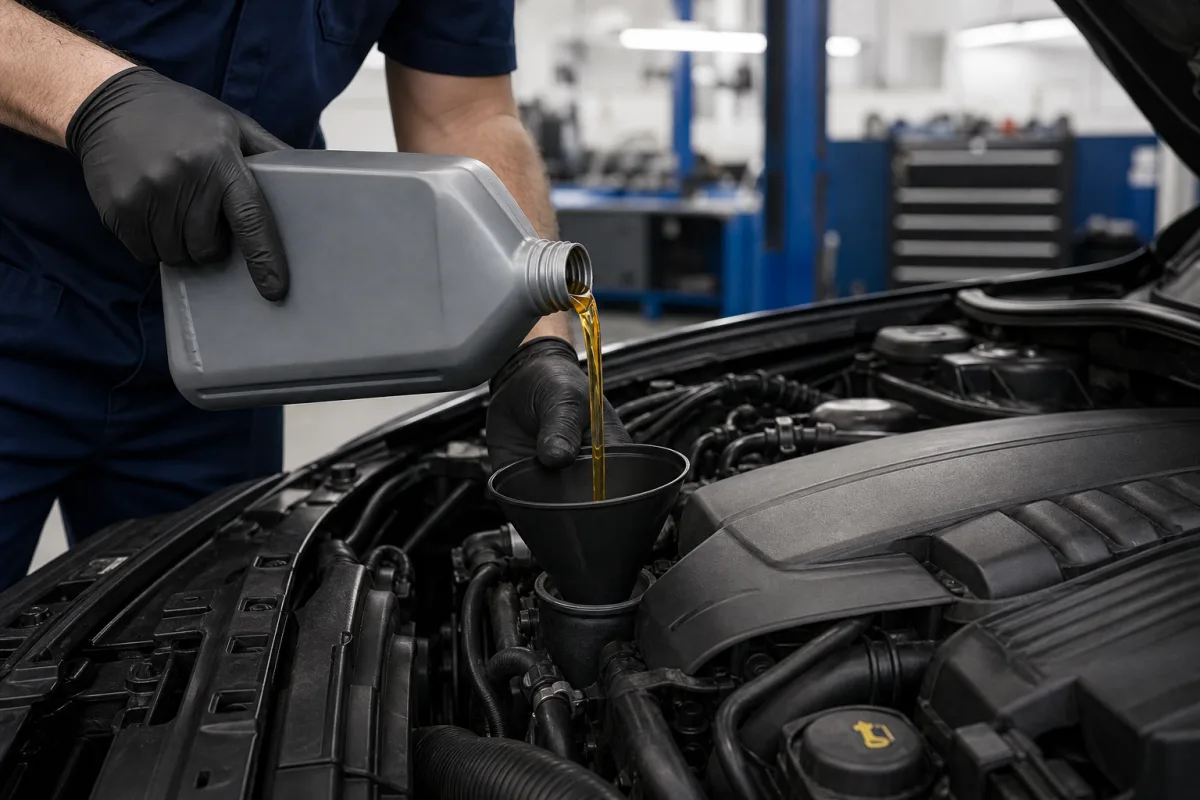
A DIY oil change can be reasonable when you have the correct information, equipment and a safe place to work. The important part is following the procedure for the specific vehicle rather than a generic online checklist.
Before starting, confirm the oil specification and quantity, compatible filter, drain-plug and filter procedures, safe lifting points, used-oil disposal method and any maintenance-reminder reset.
What Engine Oil Does
Engine oil serves several vital functions in your vehicle:
- Lubrication: Reduces friction between moving parts, preventing metal-on-metal contact
- Cooling: Absorbs and dissipates heat from engine components
- Cleaning: Suspends and removes contaminants from the engine
- Sealing: Helps maintain proper pressure and prevents leaks
The oil and filter must meet the manufacturer's requirements, and the finished level must be checked using the vehicle's stated procedure. Cold starts, short trips, idling and towing may affect the maintenance schedule only when the owner's manual classifies that use as severe service.
DIY Oil Change Checklist and Common Errors
These are the main items to verify before and after the work:
1. Using the Wrong Oil Type or Viscosity
Every vehicle has oil requirements based on its engine design and operating conditions. Check the owner's manual or manufacturer service information for:
- Viscosity: Use the grade approved for the vehicle and expected conditions
- Specification: Match the required manufacturer or industry standard, not viscosity alone
- Warranty documentation: Incorrect oil or incomplete records can complicate a claim; review the manufacturer's terms
- Quantity: Confirm capacity and verify the final level rather than relying only on the bottle count
Use the oil viscosity and specification listed by the vehicle manufacturer. When booking service, confirm the oil, filter, quantity and estimate for the specific vehicle.
2. Skipping the Vehicle's Drain Procedure
Follow the manufacturer's instructions for oil temperature, vehicle position, drain time and drain-plug sealing parts. A small amount of residual oil normally remains inside an engine; do not tilt or support a vehicle unsafely in an attempt to remove every drop.
3. Improper Oil Filter Installation
The filter must match the vehicle and be installed according to its instructions. Common errors include:
- Over-tighten or under-tighten: Both can cause leaks or filter failure
- Use incompatible filters: Not all filters fit all vehicles properly
- Ignore filter instructions: Priming requirements vary by filter design and vehicle procedure
- Skipping a leak check: A loose filter, doubled gasket or damaged seal can leak
After starting the engine as directed, inspect the filter and drain-plug areas for leaks, shut the engine off and recheck the oil level using the manufacturer's procedure.
4. Oil Level and Quality Issues
After a DIY oil change, verify:
- Low oil levels: Not adding enough oil causes inadequate lubrication
- Overfilling: Too much oil can cause foaming and reduced lubrication
- Clean handling: Keep dirt and debris out of the fill opening and containers
- Warning indicators: Stop the engine and investigate if the oil-pressure warning stays on
After an oil change, verify the oil level and check for leaks according to the vehicle manufacturer's procedure.
Costs and Tradeoffs to Compare
For a fair comparison, include the correct oil and filter, any required sealing parts, safe lifting and drain equipment, tools, cleanup supplies, used-oil handling and your time. If you choose professional service, ask for the vehicle-specific scope and estimate before authorizing work. SSS Auto Repair advertises full-synthetic oil changes starting at $89; oil quantity, specification, filter and other requirements can affect the final estimate.
Warranty and Resale Value Impacts
Maintenance records matter whether the work is done at home or by a shop. For a DIY service:
- Complicate warranty claims: Incorrect specifications or missing records may affect coverage under the manufacturer's terms
- Leave incomplete records: Keep dated receipts and note the oil specification, quantity and filter used
- Make maintenance history harder to verify: Documentation can help a future buyer understand prior service
- Create uncertainty at trade-in: Clear service records may help document vehicle care
Ask what service documentation is provided and keep your invoice with the vehicle's maintenance records.
Questions to Ask About Professional Oil Service
Oil-change scope varies by vehicle and shop. Ask whether any of the following checks are included and whether additional charges apply:
Possible Maintenance Checkpoints
- Engine oil and filter: Proper type, level, and quality verification
- Brake system: Pad thickness, rotor condition, and fluid levels
- Tires and wheels: Pressure, tread depth, and alignment check
- Suspension and steering: Component wear and fluid levels
- Electrical systems: Battery condition and charging system
- Belts and hoses: Cracking, wear, and tension inspection
- Exhaust system: Leaks, damage, and component condition
Additional checks may identify maintenance concerns, but they do not guarantee future repairs will be avoided.
Equipment and Documentation Questions
Depending on the vehicle and service, ask whether the shop uses or provides:
- Vehicle-specific procedures: Correct drain, fill, filter and torque instructions
- Appropriate tools: Equipment suited to the drain plug and filter housing
- Leak and level checks: Verification after the service
- Used-oil handling: Disposal or recycling consistent with applicable requirements
- Service documentation: Oil specification, quantity, filter and date on the invoice
Quality Parts and Fluids
SSS Auto Repair advertises a full synthetic oil-change service starting at $89. Vehicle-specific oil quantity, specification, filter and other requirements can affect the final estimate. Confirm:
- Full synthetic oil: The correct manufacturer-recommended specification for your vehicle
- Compatible filter: The correct part and specification for the vehicle
Follow the vehicle manufacturer's oil and filter specifications and maintenance interval.
Chicago Driving and the Maintenance Schedule
Some operating patterns common in city driving may qualify for a severe-service schedule, depending on the vehicle:
- Repeated short trips: Check whether the manual lists them under severe service
- Extended idling or stop-and-go use: Follow the schedule stated for the vehicle
- Cold starts: Use the manufacturer-approved viscosity and specification
- Towing or heavy loads: Use the applicable maintenance schedule when specified
Use the owner's manual or maintenance reminder to determine whether short trips, cold starts, towing or other severe-service conditions change the interval.
Compare the Complete Task
DIY cost varies with the products and tools already on hand. Professional cost varies with the vehicle's oil capacity, required specification, filter and service scope. Neither option guarantees savings, so compare the complete task and the written estimate rather than a single advertised price.
Environmental Responsibility
Used motor oil and filters require proper handling. Before starting at home, plan for:
- Collection: Use a drain pan and sealed container suitable for used oil
- Cleanup: Keep absorbent material available and clean spills promptly
- Disposal or recycling: Follow current local requirements for oil and filters
Ask how used oil and filters are handled. Anyone changing oil should follow applicable local disposal or recycling requirements and never pour used oil into trash, soil or storm drains.
Conclusion: Match the Service to the Vehicle
DIY and professional service each require the correct oil, filter, procedure, records and used-oil handling. Choose the option that fits your tools and experience, and follow the vehicle manufacturer's requirements.
At SSS Auto Repair on Sheffield Avenue, our full synthetic oil change service starts at $89; vehicle-specific requirements can affect the final estimate. Call to confirm vehicle-specific oil, filter, quantity, and pricing details.
Before booking, confirm the vehicle-specific oil, filter, quantity, service scope, applicable charges and final estimate.